 UK - English -
General
UK - English -
General



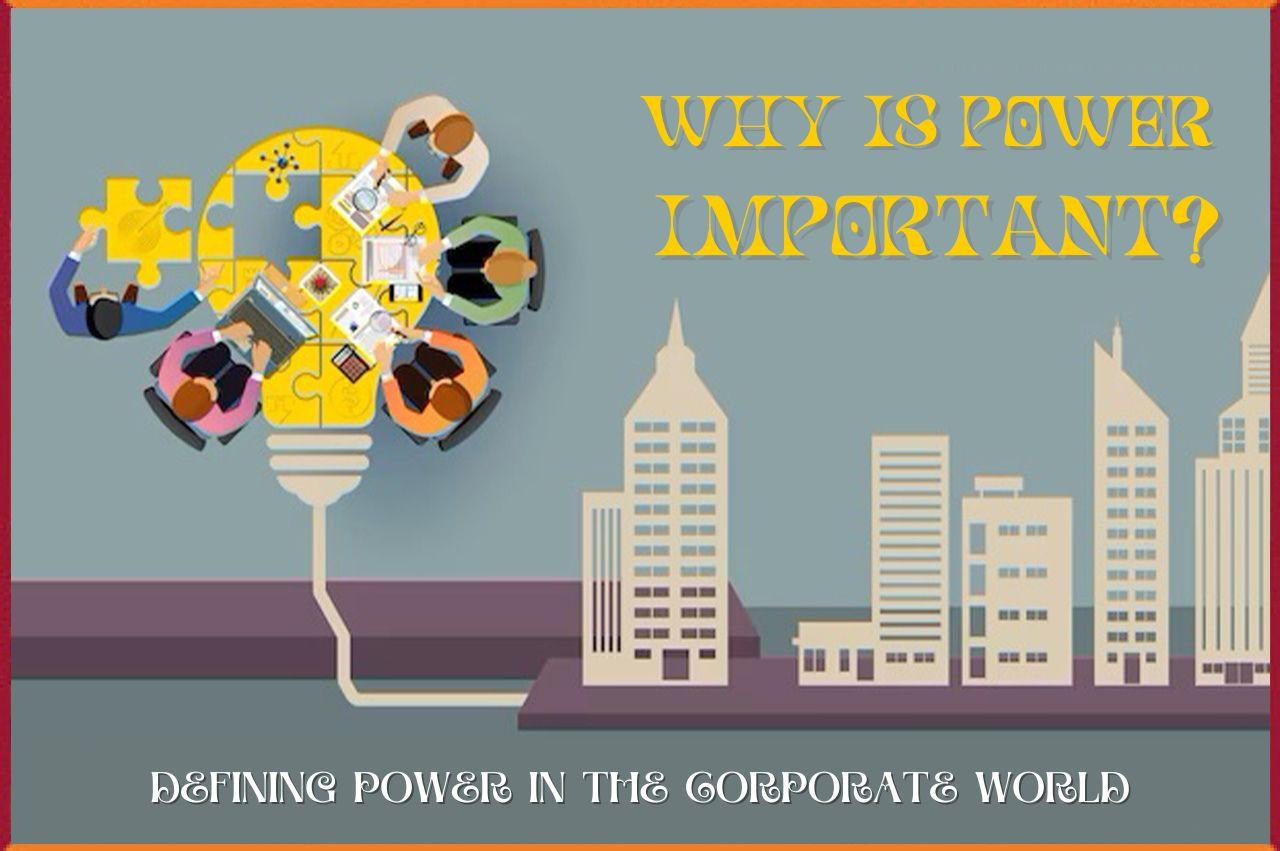
Defining Power in the Corporate World: Why Is Power Important?
Category: Samhitas | Author : Admin | Date : 26 March 2022 20:02
The corporate world’s search for supremacy over competitors and players of other industries can be summed up in one phrase – the search for ‘power’. All CEOs refer to this struggle for power as a warfare strategy. No wonder the book ‘The Art of War’ by Sun Tzu is often quoted by heads like Nandan Nilekani of Infosys during many of his interviews.
Kautilya’s Arthashastra is India’s contribution to the subject of warfare strategy. Out of 15 Arthashastra books, six are dedicated to the art of warfare. A deep study of these chapters will give us an insight into the factors that contribute to making a powerful organization. In the Arthashastra, Kautilya gives us various factors that make up true power.
1. INTELLECTUAL POWER
The power of knowledge. The corporate world is today led by knowledge workers. It’s an intangible asset of any organization. Management Gurus across the globe are talking about the knowledge revolution that is happening in this century. The greatest commodity of the future is going to be ‘knowledge’. No wonder the richest man in the world, Bill Gates, is part of the IT industry which is nothing but knowledge oriented. Even the highest-paid executives are evaluated on the basis of the knowledge they have over years of working experience.
2. MANPOWER
Men are assets of an organization. They are of two types – internal and external. Internal manpower comprises employees of the organization, the board of directors, and the shareholders. External manpower includes customers and suppliers. It is because of them that we exist. We have to focus on satisfying our customers. As Peter Drucker, the father of management points out, “The aim of marketing is to know and understand our customers so well that the product or service fits them and sells itself”.
3. FINANCIAL POWER
Success is the basis on which an organisation can progress. A sound balance sheet is a parameter on which employees, shareholders, and stakeholders continue their support of the organisation. As Jack Welch, the former Chairman of GE points out “Nothing succeeds like success”. To be financially successful is very essential. It gives a lot of courage to the organisation, not only to share its profit but also to reinvest in various productive areas like research and development, venturing into new projects and ideas as well as contributing to many social causes.
4. POWER OF ENTHUSIASM AND MORALE
This is the most important factor of all. A leader who is charged with enthusiasm and a high level of morale can create the remaining three. Research has proved that the most productive organisations are the ones that have a very high energy level in them. The drive to ‘get more’ is the true sign of progress. Venturing into new markets, scaling high targets, and working towards deadlines finds their roots in enthusiasm. All great organizations have inspired leaders.
About the Author
Dr. Radhakrishnan Pillai is an Indian management thinker, author, and Founder of Atma Darshan and Chanakya Aanvikshiki. Dr Pillai has extensively researched Kautilya’s Arthashastra, the 3rd century BC treatise and incorporated it into modern management.
https://www.youtube.com/embed/1Rlc3WVgn84-
195 Views
© 2025 The Hindu Today. All Rights Reserved