 UK - English -
General
UK - English -
General



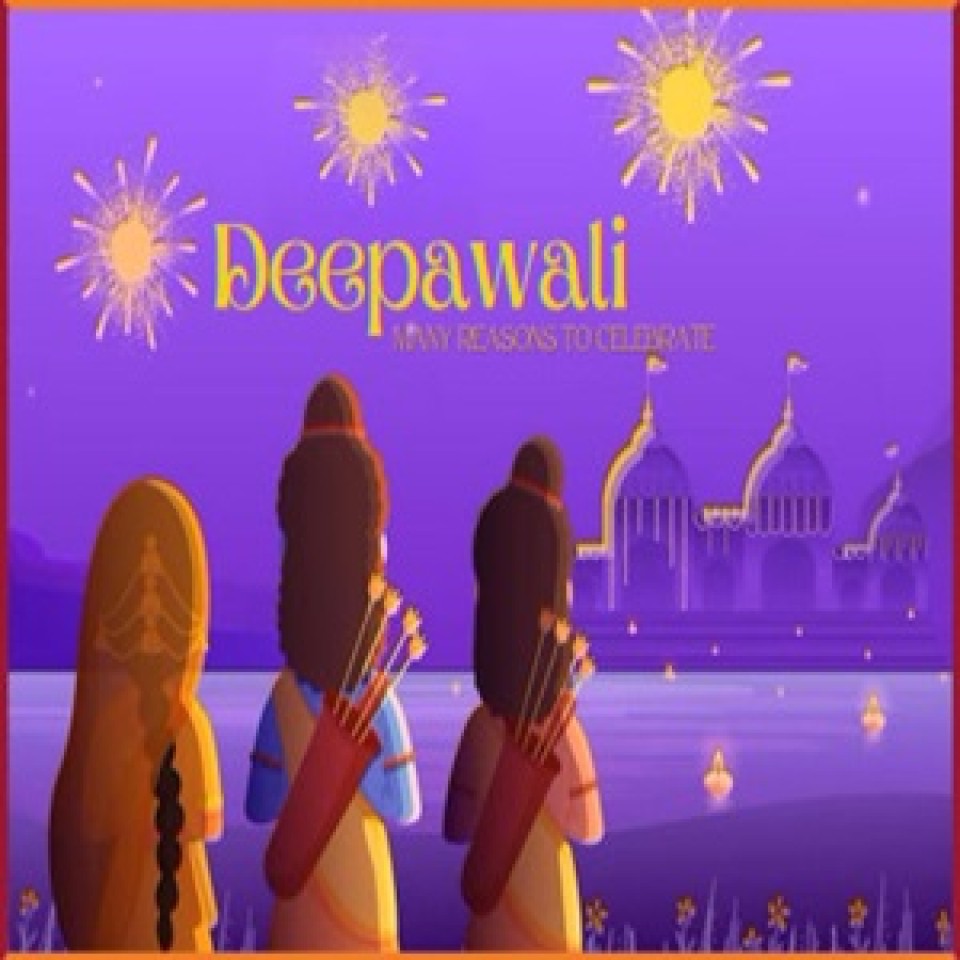
Deepavali: Many Reasons to Celebrate
Category: Samhitas | Author : Admin | Date : 09 July 2020 02:12
Deepavali, also known as Diwali, is a Hindu jubilee of
lights. The nonfictional meaning of Deepavali is "row of lights".
This jubilee is famed every time on the last two days of the dark half of
Kartik (October- November). Some indeed observe it as a three-day jubilee. It
begins with Dhan Teras, which is on the 13th day of the dark half of Kartik,
followed by the Narak Chaudas, on the 14th day, and also followed by Deepavali
on the 15th day.
People hold several beliefs about the origin of this
festivity. Deepavali is celebrated as the marriage of Lakshmi with Lord Vishnu,
according to certain scriptures. While in West Bengal, it's celebrated as Kali
puja. Primarily in India, Deepavali celebrated to mark the homecoming of Lord
Rama to Ayodhya after defeating Ravana.
On this auspicious day, Lord Krishna defeated the demon
Narakasura. In Southern India, people wake up beforehand in the morning and
wear new clothes after taking an oil painting bath. They indeed eat confections.
To celebrate the death of Narakasura, they light fireworks in the form of his effigies.
They indeed hail each other asking, “Have you had your Ganges bath?” which
refers to the oil painting bath that's taken in the morning as it's compared to
the bath taken in the holy Ganges for sanctification.
Waking up beforehand in the morning, i.e; at 4 a.m., which
is also a Brahmamuhurta is a blessing from the viewpoint of health, ethical
discipline, effectiveness in work, and spiritual advancement. There's a custom
of waking up beforehand in the morning on Deepavali. And, the bone who has
introduced this must have cherished the stopgap so that their descendants would
realise its benefits and make it a regular habit in their lives.
On Deepavali, people forget the wrong deeds of others and
forgive them. People forget all hostility and embrace each other with love. An
air full of freedom, festivity, and benevolence brings cohesiveness in the
people and instills charity in their hearts. Everyone, on this day, buys new
clothes for themselves and their family. In some places, Employers gift new
clothes to their workers.
This jubilee holds a great unifying force. People with keen
inner spiritual cognizance can easily hear the voice of the pundits, “O
Children of God! unite, and love all.” The positive climate produced by the
felicitations of love are important enough to bring change in the heart of
people around the world.
In Northern India, Hindu merchandisers, on this day, open
their new account books and supplicate for success and substance for the coming
time. People clean their homes and embellish them with flowers, rangoli, and
twinkling lights. In the evening, they indeed light up Diyas (earthen pots) at
their homes.
The stylish regard of Dipavali can be caught in Mumbai and
Amritsar. Thousands of lights placed each over the way of the big tank at the Golden
Temple in Amritsar light up in the evening. In Vaishnavism, the devotees celebrate
the Govardhan Puja and feed the poor.
It's believed that Lord Rama who's the light of lights, the tone-luminous inner light of the tone is ever shining steadily in the chamber of addicts' hearts. One should sit still, close their eyes, withdraw their senses, fix their mind on this supreme light, and enjoy the real Deepavali, by attaining illumination of the soul.
One should realise the constant and eternal
light of the soul which neither rises nor sets, through contemplation and deep
enquiry and attain full inner illumination. Addicts should combine themselves
in this light of lights and enjoy the supreme Deepavali.
-
238 Views
© 2025 The Hindu Today. All Rights Reserved